

Dentures – White Marsh, MD
Completing Your Smile With Lifelike Prosthetics
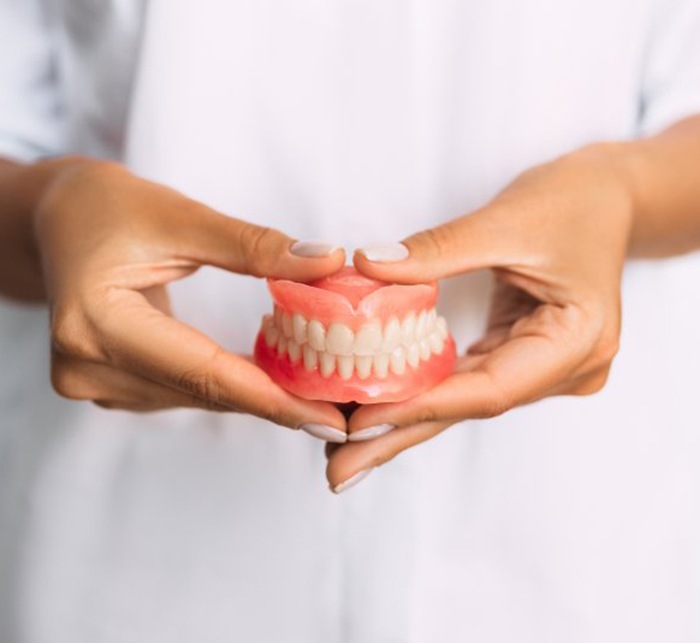
For those who are missing some, most, or all of their pearly whites, dentures are one of the most popular and reliable options for rebuilding smiles. With these natural-looking and durable prosthetics, you’ll be able to regain most of your bite while enjoying the perks of having all of your teeth, such as talking fluently and smiling proudly! Our team prioritizes accurate treatments and we customize your new smile to match your unique needs. Read on to learn more about dentures or call our office to schedule your initial consultation.
Why Choose Dental Designs of Maryland for Dentures?
- Custom & Long-Lasting Dental Materials
- Financing Offered & Discount Membership Plan Available
- In-Office Dental Implant Placement & Restoration
Who's a Good Candidate for Dentures?
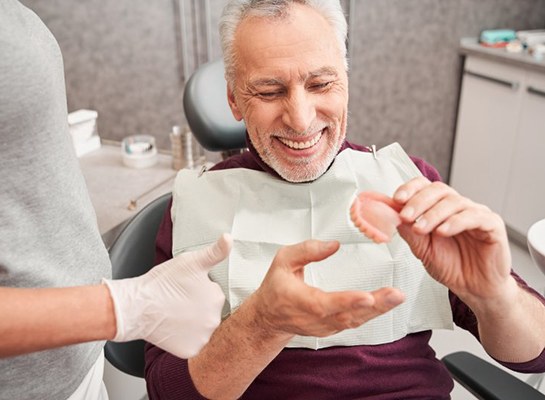
Dentures are a tried-and-true solution for patients who are missing most or all of their teeth. Of course, our team will need to confirm that you’re a good candidate during your consultation. Until this visit, you can read on to learn more, including the negative effects of tooth loss and the qualities that we look for in a good dentures candidate.
Effects of Missing Teeth

Unfortunately, tooth loss can lead to several issues, including:
- A Restricted Diet – The reduced bite strength that comes with tooth loss often leaves patients with one choice: to eat the same soft, bland foods on repeat. Not only is this boring, but it also makes it difficult to get the essential vitamins, minerals, and nutrients that your body needs.
- Dental Drift – Dental drift is when the teeth surrounding the gap in your smile begin to move. Unfortunately, this can lead to several issues, including premature wear.
- Difficulty Enunciating Clearly – To form words, your tongue makes a series of distinct movements against the back of your teeth. So, you can see why it would be difficult to enunciate clearly if you have considerable gaps in your smile!
- Low Self-Esteem – Whether you are missing several teeth in a row or an entire arch, you know first-hand how difficult it can be to smile confidently.
What Qualifies You for Dentures?
If you are interested in finding out if you’re a good candidate for dentures, then we recommend scheduling a consultation with our team at Dental Designs of Maryland. During this visit, we will complete a comprehensive oral exam to make sure you’re free of any underlying issues, including gum disease. That way, there won’t be complications later on. If we determine that this tried-and-true tooth-replacement solution is ideal for you, then we will begin developing a treatment plan to help rebuild your smile while meeting your specific dental needs.
Alternative Tooth-Replacement Options
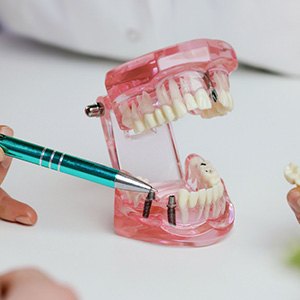
Of course, dentures aren’t the only way we can rebuild the strength of your bite and the appearance of your smile. At our White Marsh dental office, we also offer:
- Dental Bridges – This tooth-replacement solution is ideal for patients who are missing one tooth or up to four teeth in a row. If we decide together that this is the best option, then we will secure the prosthetic tooth or teeth in place with two dental crowns.
- Dental Implants – Largely considered the gold standard in tooth replacement, dental implants can replace any number of missing teeth. They are also self-supporting, help prevent bone loss, and can last for over 30 years with proper care.
If you are interested in exploring the smile-rebuilding solutions that we offer more in-depth, then get in touch with us! That way, we can learn more about your unique dental needs and goals before helping you decide the best way to proceed.
Types of Dentures
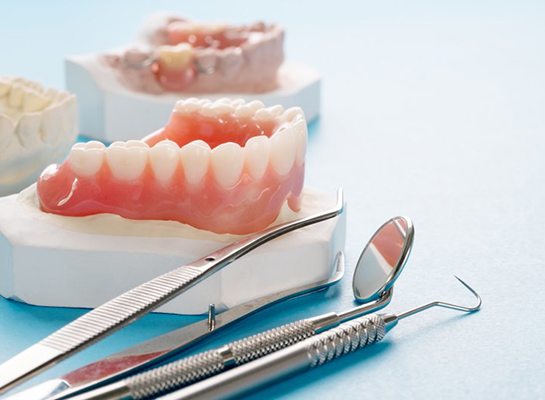
To rebuild your smile, we offer several types of dentures to get the job done. We will discuss your options during your initial visit. Until then, here’s what you can expect from the different types of prosthetics:
Partial Dentures
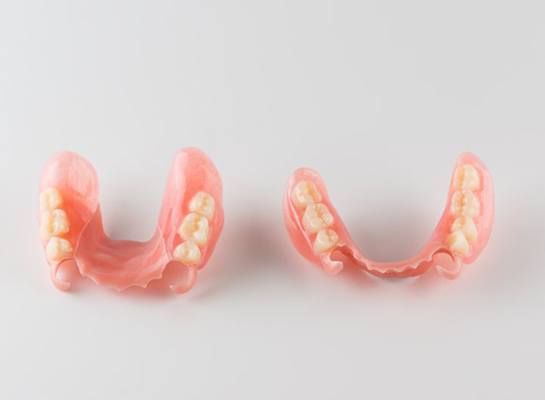
These kinds of dentures are usually designed to provide a gum-colored base while replacing several missing teeth, sometimes in different locations of a patient’s dental arch. Like a puzzle piece, partial dentures fit neatly in place via clips of brackets that attach to nearby natural teeth, offering a convenient tooth replacement.
Full Dentures
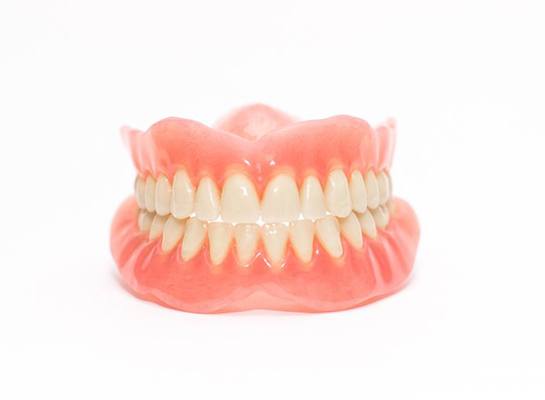
A full denture consists of a base and artificial teeth that are meant to replace your entire dental arch of missing teeth. Instead of using brackets to clasp your teeth, the base is supported via natural suction on the gum line. You can consult our team about denture adhesives if you require assistance in keeping your prosthetics in place as you get used to wearing them. Full dentures are also removable and will need to be removed for both cleaning and while you sleep.
Implant Dentures
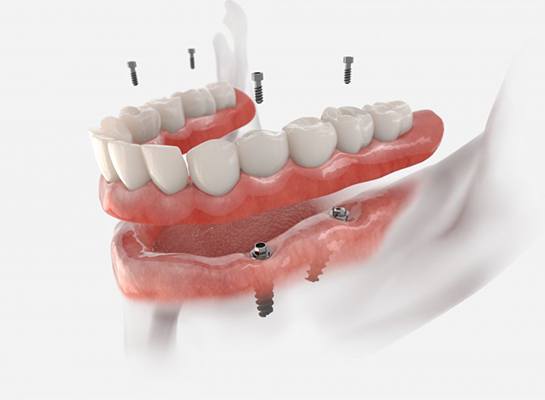
Instead of relying on your gums or natural teeth, we can place dental implants into your jawbone to support your dentures. By utilizing metal posts as new tooth roots, you’ll be able to enjoy stronger and longer-lasting results, which can also help you regain about 80% or more of your natural biting power. With proper care, your implant dentures can last decades.
How Dentures Are Made
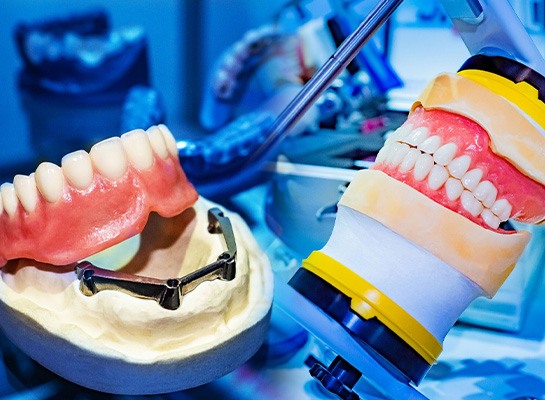
Congratulations restoring your smile with a beautiful new pair of dentures! Now that you’ve made your choice, you may be wondering how dentures are made. Understanding how your prosthetics are created and which materials are used to manufacture them will help you appreciate your new smile that much more. Whether you need a partial or full denture, here’s how the magic happens!
Step 1: Impressions
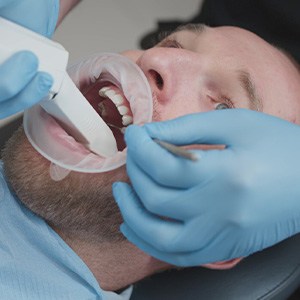
The first step in your denture journey is the impression process. Using comfortable, convenient digital impressions, your dentist will take images of your mouth that can be sent directly to the dental lab electronically. This means that the creation of your new smile can start much sooner.
Digital impressions have the added bonus of being much more comfortable to make than those old-fashioned putty models, and more accurate, too!
Step 2: Wax Mold Creation
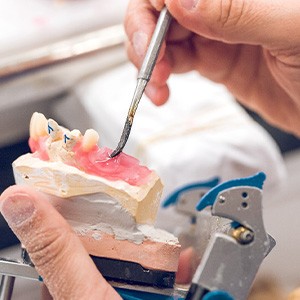
Once the dental lab receives your digital impressions, they will be used to create a wax model of your mouth. The lab technician will set either acrylic or ceramic teeth into the model, carving around them to texturize the gums.
Next, the lab will send the model back to us, and you’ll return to our office to try them on. If you and your dentist approve, they’ll be sent back to the dental lab, where the technician will create use them to create a plaster mold. This melts the wax, allowing them to inject a separator into it to prevent the acrylic from sticking. Then the acrylic is then inserted to create the base that will rest atop your gumline.
Step 3: Fit Check
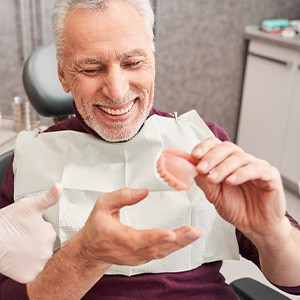
In this step, the lab will send the teeth back to us and you’ll return to our office to try them on. If approved, the dentures will be sent to the lab once again to continue the creation process. This visit is a great opportunity for you to be as discerning as possible and make any changes to the fit and appearance of your prosthetic before it advances to the next step.
Step 4: Back to the Lab for Refinements
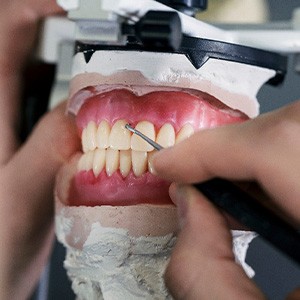
Once approved, we’ll send the wax mold back to the dental lab so the technician can create a plaster mold of the mouth. They will remove any remaining traces of wax by boiling the mold, and indent holes in the acrylic so they can attach the teeth. The dentures will then be polished, cleaned up, and any plaster residue will be removed in an ultrasonic bath.
Step 5: Take Them Home!

Finally, your dentures will be sent back to us, and you’ll come in for one last visit to try them on. If you like how they look and feel, your dentist will provide you with instructions on how to put them on and take them out, clean them, and properly use them.
In most cases, it’ll take about 30 days to adjust to your new dentures. During that time, your facial muscles will strengthen to provide better support for the dentures, making it easier to speak and chew. You may experience some slippage at first, but this is completely normal and should improve with repeated use. If it doesn’t, please give your dentist a call.
The Benefits of Dentures

Dentures offer a wide range of advantages for rebuilding your smile, including:
- Improved biting power
- Boosts confidence
- Expand your diet
- Natural-looking and durable materials
- Simple cleaning
- Prevents dental shifting
- Can last a decade or so with proper care